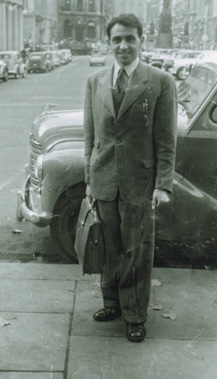
Beyond the Shadow: Unpacking Leo Blair's Enduring Legacy
The name Blair instantly conjures images of a formidable political career, but beneath the headlines of a former Prime Minister lies the fascinating story of his father, Leo Blair. Often discussed in relation to his son Tony, Leo Blair was a distinguished figure in his own right—a brilliant barrister, an inspiring academic, and a committed member of the Conservative Party. This striking political divergence between father and son, with one a staunch Tory and the other a transformative Labour leader, offers a compelling lens through which to explore the complexities of familial influence, intellectual independence, and the multi-faceted contributions of a man whose legacy extends far beyond simply being 'Tony Blair's father'.
Born in 1923, Leo Blair's life trajectory was one of remarkable resilience and profound intellectual dedication. From a challenging early life to a respected career in law and education, his journey not only shaped his own formidable character but also laid an undeniable groundwork for the public service ethos that would eventually define his son's path. Understanding Leo Blair's background, achievements, and unique personal history provides invaluable insight into the foundations of one of the UK's most notable political dynasties, urging us to look beyond simplistic labels and appreciate the depth of his individual impact.
From Foster Care to Academia: The Formative Years and Educational Legacy
The story of Leo Blair is perhaps most striking when we delve into his formative years. Born Charles Leonard Augustus Parsons in Yorkshire in 1923 to unwed travelling entertainers, his early life was marked by circumstances that would deeply influence his character and drive. In an era where being born out of wedlock carried significant social stigma, Leo’s parents, Augusta Bridson (who used the name Celia Ridgway) and Charles Parsons (known as Jimmy Lynton on stage), made the difficult decision to place him in foster care. This pivotal moment led him to James and Mary Blair in Glasgow, a very poor couple living in a tenement house, sharing a lavatory with multiple families. James was a Clydesdale ship worker, and Mary, a devoted communist who had endured two miscarriages, would become the mother figure who imparted strength and values.
This challenging start in life, navigating poverty and the absence of his birth parents, undoubtedly forged a formidable resilience within Leo Blair. It’s plausible that this experience ignited a profound appreciation for stability, opportunity, and the transformative power of education—a power he would later wield both for himself and for countless students. His ascent from these humble beginnings to a distinguished career is a testament to perseverance against adversity. To learn more about this incredible journey, explore From Foster Care to Legal Scholar: Leo Blair's Untold Story.
The Educator's Impact: Shaping Future Minds
Leo Blair’s commitment to education was not limited to his personal pursuit of knowledge; it extended to a passionate career as a lecturer. He taught law at various institutions, most notably at Durham University, where he shared his extensive legal expertise and real-world experience with aspiring legal professionals. His role as an educator was far more than just delivering lectures; it was about inspiring future generations, instilling a deep understanding of legal principles, and fostering critical thinking. He combined his profound passion for the law with a remarkable talent for communication, making complex legal concepts accessible and engaging.
Beyond the classroom, Leo Blair also served as a law examiner. This crucial position required not only a deep understanding of legal theory but also the ability to rigorously and fairly assess the qualifications of future lawyers. His work in this capacity underscored his unwavering commitment to maintaining the highest standards within the legal profession, ensuring that those who followed in his footsteps were well-prepared, ethical, and competent. His dedication to developing others cemented his legacy as a vital contributor to the legal and academic landscape of the UK.
The Rigour of the Gown: A Barrister's Life and Professional Acumen
Before his impactful academic career, Leo Blair established himself as a highly respected barrister. After studying law and qualifying, he embarked on a successful legal practice in the North East of England. His specialization in civil and family law meant he regularly navigated intricate human dilemmas and complex legal frameworks, earning a reputation for his expertise, meticulous preparation, and unwavering dedication to his clients. The life of a barrister is demanding, requiring not just a brilliant mind but also exceptional advocacy skills, ethical integrity, and a profound understanding of the nuanced application of the law.
Leo Blair was known for his sharp intellect and his remarkable ability to dissect and navigate complex legal issues. These were not merely abstract traits but practical skills applied daily in courtrooms and consultations, directly impacting the lives of individuals and families. His work involved meticulous research, strategic thinking, and persuasive argumentation – qualities that are undoubtedly transferable and could be seen reflected in his son's later approach to political problem-solving and public service. This rigorous professional environment honed skills in analysis, debate, and judgment that would serve as a powerful foundation for his wider influence.
A Conservative Compass in a Labour Son's World: Political Divergence and Influence
Perhaps one of the most intriguing aspects of Leo Blair's life is his political allegiance. While his son, Tony Blair, would rise to become a towering figure in the Labour Party, even transforming it into 'New Labour,' Leo Blair was a committed member of the Conservative Party. This wasn't a passive affiliation; he was actively involved in politics, attending party conferences and contributing to local political discussions. This dedication demonstrates a deep commitment to civic participation and a keen interest in shaping public discourse, regardless of whether he sought elected office himself.
The stark political difference between father and son offers a fascinating case study in family dynamics and ideological development. It highlights the power of independent thought and the ability for individuals within the same family to forge distinct political identities. While their overt political leanings diverged significantly, it is highly probable that Leo Blair instilled in his son a robust appreciation for debate, intellectual rigour, and the importance of public service—values that transcend party lines. His active engagement in political thought would have provided a constant backdrop for discussion and intellectual sparring within the Blair household, contributing to Tony Blair's own formidable political intellect. This rich background makes Leo Blair an architect of a political dynasty, albeit one with a uniquely bipartisan twist. For more on this, consider reading Leo Blair: Barrister, Academic, and Political Dynasty Architect.
Insight for Today: The Blair family's political contrast reminds us that healthy families can accommodate diverse viewpoints. It underscores the value of open dialogue and critical thinking, encouraging us to engage with different perspectives without sacrificing personal conviction. Such intellectual freedom within a family can actually strengthen individual resolve and broaden understanding.
Leo Blair's Enduring Legacy: More Than Just a Father
The narrative of Leo Blair is compelling not just because of his familial connection to a Prime Minister, but because of his substantial contributions as an individual. His life story is one of overcoming early adversity through sheer determination and intellectual prowess, culminating in a distinguished career in law and academia. He left an indelible mark on the legal profession as a skilled barrister and played a pivotal role in shaping future generations of lawyers through his teaching and examination work.
His unwavering commitment to the Conservative Party, contrasting sharply with his son's Labour leadership, stands as a powerful testament to personal conviction and the rich tapestry of political thought within even the closest families. Leo Blair’s legacy is a complex blend of personal resilience, intellectual discipline, and a quiet yet profound influence on the public sphere. He was a man who valued education, rigorous debate, and civic engagement, instilling principles that, while perhaps manifesting differently, echoed through his son's own contributions to British society. His life offers valuable lessons on the importance of perseverance, the power of education, and the enduring impact of a life dedicated to intellectual pursuit and service.
In conclusion, Leo Blair was far more than merely the father of a Prime Minister. He was a self-made man who navigated significant personal challenges to forge a respected career in law and academia. His dedication to education, his intellectual acumen, and his distinct political convictions painted the portrait of a man of substance and influence. The intriguing dynamic of the Conservative father and Labour son serves as a powerful reminder of the diverse paths individuals forge, even within the closest families, and underscores Leo Blair's unique and enduring contribution to British society in his own right.