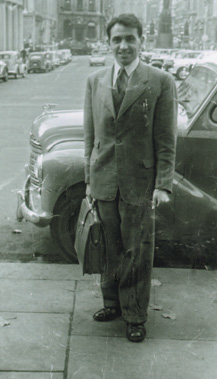
While widely recognized as the father of former British Prime Minister Tony Blair, Leo Blair (1923-2012) was a formidable figure in his own right, carving out a distinguished career in law and academia. His life story, marked by early adversity and unwavering intellectual pursuit, offers a compelling narrative of resilience, dedication, and the subtle ways an individual can shape a legacy that extends far beyond their immediate sphere. Far from being merely a footnote in his famous son's biography, Leo Blair's contributions to the legal profession, his commitment to education, and his unique political leanings position him as a pivotal architect in understanding the familial and intellectual roots of one of the UK's most notable political dynasties.
The Formative Years: Resilience Forged in Adversity
The early life of Leo Blair was anything but conventional, painting a vivid picture of the personal strength and determination that would come to define him. Born Charles Leonard Augustus Parsons in Yorkshire in 1923, his beginnings were marked by circumstances that, in earlier times, carried significant social stigma. He was born out of wedlock to a pair of travelling entertainers, Augusta Bridson (who later used the name Celia Ridgway) and Charles Parsons (known by his stage name, Jimmy Lynton).
The transient lifestyle of his birth parents, coupled with the societal pressures associated with illegitimacy, led to a profound decision: Leo was given to a couple, James and Mary Blair, whom his parents met while on tour in Glasgow. These foster parents, though loving, were extremely poor, residing in a humble tenement house where essential facilities, such as the lavatory, were shared among multiple families. James Blair toiled as a Clydesdale ship worker, while Mary, a devoted communist, grappled with her own personal tragedies, having suffered two miscarriages.
This challenging upbringing, characterized by poverty and an early separation from his birth parents, undoubtedly instilled in Leo Blair a profound sense of determination and a drive for self-improvement. His experiences in foster care likely fuelled a powerful ambition, pushing him to excel academically and professionally as a means of building a stable and respected life. These formative years, though difficult, laid the groundwork for a man who would pursue knowledge with relentless vigour and achieve considerable success in fields demanding intellect and discipline.
A Distinguished Career in Law and Education
Leo Blair's professional life was a testament to his sharp intellect and unwavering dedication. He transitioned from his challenging childhood to become a respected figure in the legal and academic spheres, leaving an indelible mark on both.
The Barrister's Path: Expertise in the North East
After studying law, Leo Blair qualified as a barrister, establishing a successful practice in the North East of England. His legal career was particularly focused on civil and family law, areas that required not only a deep understanding of legal principles but also considerable empathy and meticulous attention to detail. He quickly earned a reputation for his expertise and steadfast dedication to his clients, becoming known for his ability to navigate complex legal issues with clarity and precision. His analytical prowess and methodical approach to problem-solving were characteristics that would later be echoed in his son Tony's political career, suggesting a familial influence on their respective approaches to public and professional challenges.
Inspiring Future Generations as an Academic
Beyond his courtroom successes, Leo Blair harboured a passion for sharing his knowledge and experience. He embraced the role of an educator, becoming a law lecturer at various institutions, most notably Durham University. In this capacity, he inspired countless future legal professionals, imparting not just legal doctrine but also the ethical dimensions and practical nuances of the profession. His teaching career allowed him to merge his love for law with his talent for communication, ensuring that his impact extended to the development of others.
Furthermore, Leo Blair served as a law examiner, a role that underscored his commitment to upholding the highest standards within the legal profession. This demanding position required a comprehensive understanding of legal principles and the ability to rigorously and fairly assess aspiring lawyers. His work as an examiner was crucial in ensuring that only the most qualified and competent individuals entered the legal field, reflecting his deep-seated belief in the importance of professional excellence and integrity.
Political Engagement and Ideological Bridges
One of the most intriguing aspects of Leo Blair's life was his active, albeit non-electoral, involvement in politics. He was a committed member of the Conservative Party, a fact that stands in stark contrast to his son Tony Blair's eventual leadership of the Labour Party, and indeed, his transformation of the party into 'New Labour'. This ideological divergence within the same family offers a fascinating insight into the complexities of personal belief, political evolution, and the nature of influence across generations.
Leo Blair's affiliation with the Conservatives was not merely passive membership. He engaged actively, attending party conferences and contributing to local political discussions. This demonstrated a profound commitment to civic participation and a genuine interest in shaping public discourse. His political activities showcased a man deeply invested in the society around him, even if his chosen political vehicle differed sharply from that of his son.
The presence of such differing political convictions within the Blair family highlights several important lessons. Firstly, it underscores the importance of intellectual independence and the freedom to forge one's own political path, even when influenced by strong familial figures. Secondly, it suggests that shared values, such as a commitment to public service or a belief in justice, can transcend specific party affiliations. The contrasting political allegiances of Leo and Tony Blair provide a rich backdrop for understanding how individuals within a family can pursue similar goals through vastly different ideological lenses, ultimately contributing to the dynamic tapestry of British politics.
Architect of a Legacy: Beyond Familial Ties
To view Leo Blair solely through the lens of being Tony Blair's father would be to diminish the rich and impactful life he led. Instead, it is more accurate to consider him an architect of a broader legacy, one built on the foundations of resilience, intellectual rigor, and an unwavering commitment to principle. His journey from foster care to a distinguished career in law and academia speaks volumes about his character and drive. He embodied the idea that one's beginnings do not dictate their end, and that through education and dedication, significant personal and professional milestones can be achieved.
The "political dynasty" often associated with the Blair name is not merely a lineage of power, but rather a transmission of vital intellectual and ethical values. Leo Blair instilled a deep respect for critical thinking, an analytical approach to problems, and a commitment to public discourse. These are traits that demonstrably influenced his son's approach to leadership and policy-making, even if the political conclusions they reached differed. His professional life, marked by precision in law and dedication in education, provided a bedrock of intellectual honesty and the importance of evidence-based reasoning.
Furthermore, Leo Blair's life offers a powerful example of civic engagement extending beyond direct political office. His active participation in the Conservative Party, despite his son's Labour leadership, illustrates a commitment to contributing to society through chosen channels. It teaches us that influence can be wielded in various forms—through legal precedent, through inspiring students, or through thoughtful political participation—all contributing to the broader societal fabric. His story reminds us that the groundwork for significant public figures is often laid by individuals who, while not always in the spotlight, foster the intellectual curiosity, ethical grounding, and resilience necessary for future leaders to emerge.
Conclusion
Leo Blair's life was a testament to the power of determination, intellectual curiosity, and a deep-seated commitment to justice and education. From his challenging beginnings in foster care to his esteemed career as a barrister, law lecturer, and examiner, he consistently demonstrated an exceptional capacity for growth and contribution. His involvement in Conservative politics, juxtaposed with his son's Labour leadership, offers a nuanced perspective on familial influence and ideological independence. Ultimately, Leo Blair was far more than just Tony Blair's father; he was a formidable individual whose legacy speaks to the enduring value of hard work, intellectual integrity, and the quiet but profound influence one can exert on both personal and public life, truly standing as an architect of a remarkable and multifaceted dynasty.