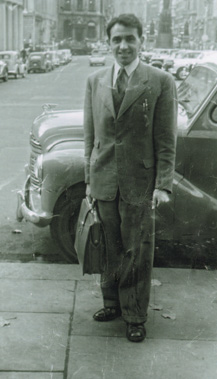
From Foster Care to Legal Scholar: Leo Blair's Untold Story
The name Blair often conjures images of political power and Downing Street. Yet, long before Tony Blair became a transformative British Prime Minister, his father, Leo Blair, forged a remarkable path of his own. Leo Blair's life story is not just a footnote in a political dynasty; it is a compelling narrative of resilience, intellectual prowess, and a profound commitment to justice and education, beginning from circumstances that would challenge even the strongest of spirits. His journey from an 'illegitimate' child in foster care to a respected barrister and esteemed academic is a testament to the enduring power of ambition and the human spirit's ability to transcend adversity.
The Unconventional Start: Born into a Performing World
Born Charles Leonard Augustus Parsons in Yorkshire in 1923, Leo Blair entered the world under an unconventional star. His parents, Augusta Bridson (who later used the stage name Celia Ridgway) and Charles Parsons (known professionally as Jimmy Lynton), were travelling entertainers. While their lives were vibrant and dynamic, they were also transient and lacked the stability required to raise a child. More significantly, Leo's birth out of wedlock carried a significant social stigma in the 1920s, labelling him an 'illegitimate' child and placing him outside the societal norms of the era.
The challenges of their performing lifestyle, coupled with the societal pressures of an unwed couple raising a child, led to a difficult decision. While on tour in Glasgow, Celia and Charles entrusted their infant son to James and Mary Blair, a couple they had met. This act marked the beginning of Leo's life in foster care, a formative experience that would indelibly shape his character and worldview. This early separation, though undoubtedly painful, inadvertently set him on a trajectory vastly different from that of his birth parents.
A Glasgow Tenement: Poverty, Resilience, and Found Family
Leo Blair's new home with James and Mary Blair offered a stark contrast to the bohemian world of his birth parents. The Blairs were a working-class couple living in a modest tenement house in Glasgow. Life was far from easy; resources were scarce, and the family shared a lavatory with multiple other families – a common reality for many in post-war industrial Scotland. James Blair worked diligently as a Clydesdale ship worker, contributing to the city's vital shipbuilding industry, while Mary Blair, a devoted communist, provided a home filled with ideological passion and a deep, if often unexpressed, love. Mary's personal history, having suffered two miscarriages, perhaps fueled her maternal devotion to young Leo.
Growing up in such an environment instilled in Leo a profound understanding of social inequality and the struggles faced by ordinary working people. This firsthand experience of poverty and community, shaped by the sturdy values of his foster parents, likely honed his sharp intellect and resilience. It taught him the importance of hard work, perseverance, and the value of education as a path to betterment. Despite the material hardships, this foster home provided the stability and foundation upon which he would later build a distinguished career. The name Blair, which he adopted from his foster parents, became more than just an appellation; it was a symbol of his adopted heritage and the roots that grounded him.
From Adversity to Academia: Leo Blair's Legal Ascent
Defying his humble beginnings, Leo Blair dedicated himself to education, eventually pursuing a career in law. His intellectual curiosity and drive propelled him through his legal studies, culminating in his qualification as a barrister. He established a successful legal practice in the North East of England, specializing in civil and family law. In this demanding field, Leo Blair earned a formidable reputation for his sharp intellect, meticulous approach, and unwavering dedication to his clients. He possessed a remarkable ability to dissect complex legal issues, advocating for those who often found themselves navigating challenging personal circumstances.
His work as a barrister was more than just a profession; it was a vocation where he could apply his understanding of human nature and societal structures, perhaps deepened by his own unique childhood experiences. His commitment to justice and his analytical prowess were qualities that would later resonate in his son Tony Blair's approach to public service. Beyond the courtroom, Leo Blair transitioned into academia, sharing his vast knowledge and practical experience with aspiring legal minds. He became a law lecturer at institutions including the prestigious Durham University, where he inspired countless students, imparting not only legal principles but also a profound sense of ethical responsibility and critical thinking. This role allowed him to combine his passion for the law with his talent for communication, leaving an indelible mark on future generations of legal professionals.
Moreover, Leo Blair's commitment to the integrity of the legal profession extended to his role as a law examiner. In this capacity, he played a crucial role in assessing the qualifications of future lawyers, ensuring that high standards were maintained and that new practitioners were well-equipped to serve justice. His life vividly demonstrates that one's starting point does not dictate one's destination, and that rigorous education can be a powerful catalyst for upward mobility and societal contribution.
Beyond the Bench: Politics, Pedagogy, and Paving the Way
Leo Blair's influence extended beyond the legal sphere and lecture halls. He was also an active, though not elected, participant in the political landscape, notably as a member of the Conservative Party. This allegiance is particularly noteworthy when contrasted with his son Tony Blair's later leadership of the Labour Party. This generational political divergence offers a fascinating glimpse into the intellectual independence and diverse perspectives that can exist within even the most prominent families. Leo's involvement, which included attending party conferences and contributing to local political discussions, underscores his profound commitment to civic participation and his desire to shape public discourse, irrespective of holding public office. For a deeper dive into this intriguing dynamic, you might find Conservative Father, Labour Son: Unpacking Leo Blair's Legacy particularly insightful.
His academic career, particularly at Durham University, was pivotal in cultivating a culture of intellectual rigour and ethical practice among his students. He didn't just teach law; he taught the philosophy behind it, the societal implications, and the profound responsibility that comes with upholding justice. The lessons gleaned from his own life – perseverance, the pursuit of knowledge, and a commitment to public good – undoubtedly permeated his teaching, inspiring a holistic approach to legal practice. For a comprehensive overview of his professional contributions, consider reading Leo Blair: Barrister, Academic, and Political Dynasty Architect.
Practical Tip: Leo Blair's life illustrates the power of mentorship and quality education. For anyone aspiring to a challenging profession, seeking out experienced teachers and mentors who can provide both theoretical knowledge and practical wisdom is invaluable. Their influence can extend far beyond the curriculum, offering guidance for life's broader challenges.
The Enduring Legacy of Leo Blair: Inspiration for All
Leo Blair's life, spanning from 1923 to 2012, is a compelling narrative of overcoming profound early disadvantages to achieve significant professional and intellectual distinction. His journey from an 'illegitimate' child placed in foster care in a Glasgow tenement to a respected barrister, law lecturer, and the father of a Prime Minister, speaks volumes about the human capacity for growth and achievement. He embodied a fierce dedication to education and the legal profession, using his intellect and experience to contribute meaningfully to society.
His story offers profound lessons in resilience, the transformative power of education, and the importance of civic engagement. Leo Blair demonstrated that one's origins do not define one's destiny, and that with determination, intellectual curiosity, and an unwavering commitment to one's chosen path, extraordinary achievements are possible. His legacy, though often discussed in the shadow of his famous son, stands tall as a testament to a life lived with purpose, intellect, and an enduring impact on the legal and academic landscape of Britain.